The Current State of U.S.-China Pharmaceuticals: Why Neither Can Leave the Other (US vs. China Economy Part 4)
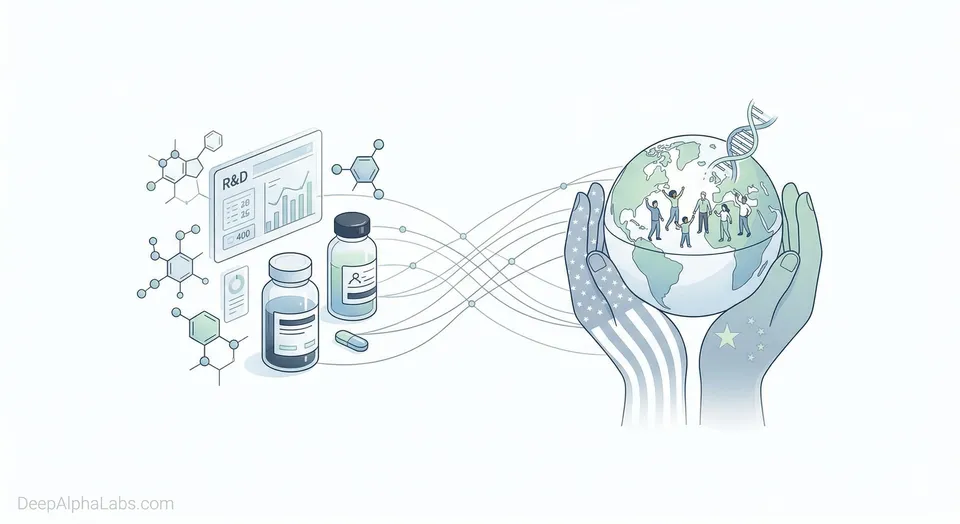
In the global pharmaceutical landscape, China and the United States undeniably play two pivotal roles. In terms of market scale, the US market reached approximately $511 billion in 2024, grew to $530 billion in 2025, and is projected to hit $553 billion in 2026. As the world's largest market, the US accounts for 38% to 42% of the global share, maintaining absolute dominance in the prescription drug sector. According to Towards Healthcare, the US market is poised to exceed $965 billion by 2035.
Meanwhile, the Chinese market recorded pharmaceutical sales of approximately $248.6 billion in 2024, with a total terminal market size of $272.2 billion. Of this, physical retail pharmacies accounted for $62.9 billion, a year-on-year (YoY) increase of 5.9%. In 2025, despite policy pressures such as medical insurance cost controls and Volume-Based Procurement (VBP), total drug sales reached approximately $256.9 billion (a slight YoY decline of 1%), though the total terminal market remained stable at around $277.8 billion. Based on current trends, HealthcareCN predicts that China's pharmaceutical market will reach $302.5 billion in 2026, continuing its strong growth potential.
From a global perspective, Precedence Research statistics show the global pharmaceutical market was approximately $1.65 trillion in 2024, climbing to $1.77 trillion in 2025, and is expected to reach $1.88 trillion in 2026, with a Compound Annual Growth Rate (CAGR) of 6.15%. In this global map, the US holds the top spot with a 42% share (2024 data), followed closely by China with a 12%–15% share, which is expanding at a rate of over 8% annually.
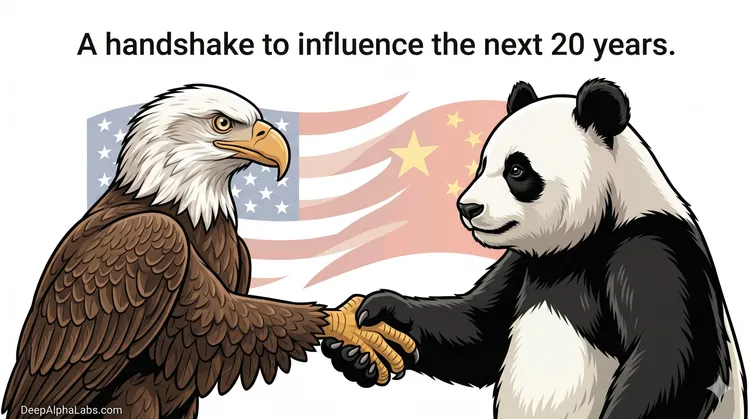
These vast market sizes foster intense competition while simultaneously driving deep bilateral cooperation. In today’s highly specialized global division of labor, the US and Chinese pharmaceutical industries have formed an "intertwined" relationship—from Active Pharmaceutical Ingredient (API) supply to innovative drug R&D, and from clinical trials to commercialization. The bonds of cooperation are far tighter than those of competition.
I. Deep Integration of Supply Chains
The partnership begins with supply chain binding. In 2023, the US API market was valued at approximately $86 billion. China, with its massive production capacity, holds a core position as a primary source of US API imports. By volume, China’s API exports to the US reached approximately $40 billion in 2023, accounting for about 40% of US API imports. Specifically, China provides 80% to 90% of antibiotic APIs, 95% of ibuprofen raw materials, and 91% of hydrocortisone for emergency medicine. This structural dependence makes US-China pharmaceutical trade a critical anchor for the stability of the global industry.
II. Full-Chain Cooperation in Innovative Drug R&D
In the realm of innovation, US pharmaceutical companies rely heavily on the Chinese market. Developing an innovative drug is a 10-to-15-year journey costing billions of dollars. At every critical juncture of this value chain, Chinese firms are deeply embedded in the US R&D ecosystem.
This evolution is telling:
- Around 2000: China was primarily a low-cost manufacturing base for APIs and generics.
- Post-2010: With the rise of China’s CRO/CDMO industry, Chinese firms began participating in drug discovery, preclinical research, and clinical trials.
- Today: China has established technical advantages in cutting-edge fields like ADCs, bispecific antibodies, and cell therapy. In 2024, approximately 31% of innovative drug candidates in-licensed by major Multi-National Corporations (MNCs) originated from China. The value of Chinese innovative drug License-out deals surged from the $10-billion level in 2021 to over $100 billion in 2025.
III. Inseparable Value Chain Cooperation: A Closer Look
Using the R&D process as an example, we can see how collaboration occurs at every stage:
- Drug Discovery & Basic Research: Chinese CROs, possessing one of the world's largest compound libraries, can perform tens of thousands of high-throughput screenings daily, helping US firms increase discovery efficiency by 3 to 5 times.
- Preclinical Research: Leveraging rich non-human primate resources and a robust GLP-certified system, China completes standardized preclinical studies at 30% to 50% of the cost in the US, with data directly recognized by the FDA.
- Clinical Trials: This is the most expensive stage. A 2024 McKinsey report estimates the average total cost of a new drug (including failure and capitalization costs) at $2.2 billion to $2.6 billion, with clinical trials accounting for 60%. China’s per-capita cost for Phase III trials is $10,000–$25,000, compared to $50,000–$80,000 in the US. Furthermore, China’s 1.4 billion population allows for rapid patient enrollment. BCG estimates that a one-month delay in launch can cost a company $200 million to $500 million in potential revenue. Chinese sites can shorten trial cycles by 6 to 18 months, translating into massive returns during the patent exclusivity period. For a blockbuster like Keytruda ($30 billion annual sales), a 12-month reduction in development time theoretically recovers billions in peak sales.
- Regulatory Approval: Chinese CROs assist US firms in preparing high-quality NDA/BLA submissions, ensuring data integrity and compliance for "dual-filing" in both China and the US.
- Commercial Production: China’s CDMOs are the preferred manufacturers. Frost & Sullivan data projects the global CDMO market to reach $124.3 billion by 2025. Meanwhile, the Chinese CDMO market is expanding much faster, projected to reach $21.7 billion in 2025, serving as the core engine of global industry growth.
IV. The Irreplaceable Role of China
China's role is no longer just about low cost; it is built on economies of scale, a vast talent pool, and full supply chain integration. China has formed the world's most complete pharmaceutical industrial system over 30 years. Rebuilding similar chemical infrastructure elsewhere would take 10–15 years and tens of billions in investment. Furthermore, China produces over 1 million STEM graduates annually. A prime example is WuXi AppTec, which employs over 40,000 people, with over 80% dedicated to R&D—a scale and degree of specialization that competitors like India or Vietnam have yet to match.
V. Future Outlook: Heightened Competition, Deeper Interdependence
Looking ahead, the US-China relationship will be defined by three characteristics: intensified competition, deepening interdependence, and structural realignment.
- Market Expansion: By 2030, China's pharmaceutical market is expected to reach $378.6 billion, accounting for 25% of the global bio-pharma market.
- Three Major Shifts:
- Transitioning from "US R&D, China Mfg" to "Bilateral R&D, Global Commercialization." (In 2025, Chinese License-out totals exceeded $135.6 billion).
- Cooperation moving from manufacturing to source innovation. (In 2025, Chinese innovative drug BD deals reached $1.3 trillion, leading the world).
- Shift from cost-oriented to efficiency-and-innovation-oriented cooperation.
Challenges and Realities: US government policy, including potential tariffs of up to 200% on imported drugs and the push for "re-shoring" through projects like FIRRMA and CFIUS scrutiny, creates a harsher regulatory environment. However, the underlying logic remains solid. The US leads in "0 to 1" original innovation, while China excels in drug translation and commercialization.
The future may evolve into a pattern of "selective decoupling and strategic interdependence." While generic supply chains may diversify to India or Southeast Asia, China will play an increasingly vital role in innovative drug R&D, complex formulation manufacturing, and frontier technology development.