America Risks Missing the Next Thirty Years of Automotive Growth
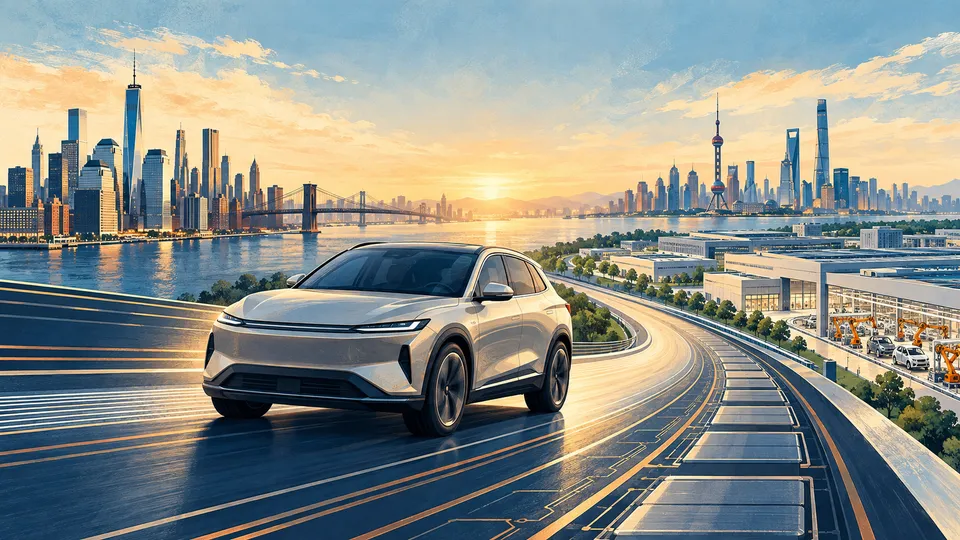
American finance and Chinese manufacturing could make the next generation of cars more affordable and build a lasting global business.
America should make cooperation with Chinese automakers part of its long-term industrial strategy. Chinese companies have developed a powerful combination of battery technology, manufacturing scale and affordable products. American companies bring capital, financial expertise, distribution networks and deep knowledge of their customers. Bringing those capabilities together could create substantial value over the next thirty years.
The commercial logic begins with the household budget. People want cars they can afford to buy and afford to drive. That preference helped Japanese automakers build an enduring position in the United States. Chinese electric vehicles are now advancing the same proposition through a different technology. Washington should recognize the opportunity and give American businesses a practical way to participate.
The consumer logic that built Japan’s success
Japanese automakers earned American customers in large part by offering economical, reliable transportation. Fuel efficiency became especially compelling after the oil shocks of the 1970s. Toyota’s account of the Corolla’s growth links its appeal to affordable pricing, durability and fuel economy. Over time, lower everyday costs and dependable products translated into customer loyalty. [1]
The result is visible in today’s market. Japanese brands sold roughly six million vehicles in the United States in 2025, about 37% of a light-vehicle market of approximately 16.2 million. Toyota and Lexus alone accounted for about 2.52 million sales. Those numbers reflect decades of success in meeting the needs of ordinary households. [2]
Chinese EVs offer a new way to meet those needs. Electric drivetrains use energy efficiently and require less routine maintenance than internal-combustion systems. China’s battery supply chain and manufacturing scale also support competitive purchase prices. According to the International Energy Agency, nearly 70% of battery-electric cars sold in China in 2025 were already cheaper than comparable combustion-engine models before government purchase incentives. The U.S. Department of Energy likewise identifies lower energy and maintenance expenses as benefits of electric vehicles. [3][4]
Chinese domestic prices will not simply carry over to American showrooms: tariffs, distribution and local production affect the final price, while charging arrangements affect running costs. Even so, the underlying opportunity is clear. Manufacturers that make a capable car less expensive to buy and operate have a proposition consumers will continue to value.
Vehicles such as BYD’s Dolphin and Atto 3, and MG’s MG4, target everyday transportation. Chinese manufacturers also offer plug-in hybrids and conventional models suited to markets with different charging infrastructure. Their strongest immediate overlap with the American market lies in family cars, compact SUVs and competitively priced EVs.
That puts Japanese and Korean brands squarely in the competitive picture, alongside Tesla and American EV models. Detroit retains considerable strength in full-size pickups and large SUVs: Ford sold nearly 829,000 F-Series trucks in the United States in 2025. Chinese competition would reach different parts of the market at different speeds. A blanket barrier also shelters foreign incumbents while narrowing the choices available to American buyers. [5]
A growth opportunity for American automakers
American automakers have valuable assets to bring to a partnership. Their factories, dealers, service operations and customer relationships could help turn Chinese product and battery capabilities into successful American businesses. Cooperation could shorten the path to offering more affordable vehicles and put existing assets to more productive use.
Foreign automakers have already demonstrated how much investment can follow access to American customers. Japanese-brand manufacturers had accumulated approximately $70 billion in U.S. manufacturing investment by 2025, according to the Japan Automobile Manufacturers Association. Their operations support local suppliers, workers and dealers. Foreign product success can become part of domestic economic growth. [6]
There are also concrete examples of Chinese companies sharing international opportunities with established partners. Stellantis owns 51% of Leapmotor International, with Leapmotor holding 49%, combining Chinese products with an international sales and operating network. Ford’s Michigan battery project follows another model: a Ford-owned plant using licensed CATL technology. These arrangements illustrate the range of cooperation available, from equity partnerships to technology licensing. [7][8]
The size of the American market makes even a modest position commercially significant. At an annual market of 16.3 million vehicles, a 5% share represents about 815,000 sales. The opportunity would extend through manufacturing, financing, distribution and after-sales services. American companies should be competing to capture that business.
Cooperation also gives them a way to learn faster. Working with a partner that has developed efficient battery production and rapid product development can strengthen an American company’s own capabilities. The benefits accumulate through engineering experience, supplier relationships and repeated product launches. Starting earlier gives companies more time to build them.
American finance can help Chinese manufacturing go global
The larger opportunity extends beyond the United States. Chinese automakers are building international businesses, and those businesses need capital, financial services and operating infrastructure. America has considerable expertise to contribute at every stage.
China exported approximately 7.10 million vehicles in 2025, up 21.1%, according to the China Association of Automobile Manufacturers. New-energy vehicles accounted for about 2.62 million of that total. Chery exported roughly 1.34 million vehicles, while BYD reported overseas sales of more than one million. These are substantial businesses with expanding requirements for investment and services. [9][10]
The growth is reaching varied markets. In 2025, Chinese brands accounted for approximately 9.7% of new-car sales in the United Kingdom. MG sold more than 300,000 vehicles across Europe, BYD sold more than 112,000 in Brazil, and GWM, BYD and MG all ranked among Australia’s ten largest brands by vehicle sales. The commercial case is being tested by consumers across different income levels and driving conditions. [10][11]
As exports develop into local production and distribution, financing needs multiply. A factory needs long-term capital. A supplier needs funding for equipment. A dealer needs credit to carry inventory. A household may need a loan or lease to bring a car within reach. Charging networks, logistics and service businesses add further opportunities.
American banks, investors and other financial institutions can participate through project finance, equity investment, dealer financing and consumer credit. Good financing can match repayment schedules to cash flows, support distribution and reduce the upfront burden of purchasing a vehicle. It can help competitive manufacturing reach more customers.
This creates a useful combination: lower manufacturing costs reduce the vehicle price, financing spreads the purchase expense, and lower energy and maintenance costs ease the household’s ongoing burden. Together, they can expand the pool of people able to buy a new car.
American institutions can pursue these opportunities in Europe, Southeast Asia and Latin America as well as in any future U.S. partnerships. Each investment still needs sound underwriting. The strategic task is to build expertise and relationships in a growing industry. If American capital stays away, the customers, factories and financing needs will continue to develop, and other institutions will serve them.
Make cooperation valuable to American communities
A durable policy needs visible domestic benefits. American households should see more affordable vehicles. Workers should see opportunities in new manufacturing projects. Dealers should gain products their customers want. Local governments should have a chance to attract production and supplier investment.
The auto industry’s political influence reflects its importance to those communities. U.S. vehicle and parts manufacturing directly employs roughly one million people, while new-car dealerships employ more than 1.1 million. The wider economic footprint reaches far beyond the factory gate. [12]
Geography magnifies that influence. In the 2024 presidential election, the winning margins were 80,103 votes in Michigan, 29,397 in Wisconsin and 120,266 in Pennsylvania. Together, those states carried 44 electoral votes, enough to change the result had all three flipped and everything else stayed the same. Manufacturing livelihoods deserve sustained attention in any serious national strategy. [13]
Partnerships that bring production, supplier contracts and training into American communities can give cooperation a constituency. Consumer affordability should be part of the same argument. Lower car payments and operating expenses leave families with more income for other needs.
The long-term purpose of industrial policy is to help American businesses make products that people want to buy. Access to competitive battery technology and manufacturing methods can advance that goal. American workers and communities should have the opportunity to participate in the next stage of the industry’s development.
Build now for the next thirty years
Existing tariffs and connected-vehicle restrictions limit the scope for Chinese automotive participation in the United States. Expanding cooperation would require clear policy pathways for permitted investment, licensing and production. Washington can define security, product and labor requirements while giving businesses a workable basis for long-term planning. [14]
American automakers should be developing potential partnerships around batteries, products and manufacturing. American financial institutions should be building knowledge of Chinese companies’ international expansion and the customers it creates. State and local governments should be considering how investment can strengthen their own industrial base.
Individual projects will differ. The broader direction deserves a confident response: consumers value lower costs, Chinese manufacturers are becoming increasingly capable of delivering them, and American capital and commercial expertise can help turn that capability into durable businesses.
Japanese automakers demonstrated how profoundly affordable, efficient cars could reshape the U.S. market. Chinese EVs are taking that competition into a new phase. The factories, financing relationships and distribution networks being built today will help determine who benefits over the next thirty years. America should begin building its share of that future now.
Sources and data notes
[1] Toyota USA, Corolla history. Affordability, fuel economy and reliability were important contributors to Japanese success, alongside other factors.
[2] NADA and Car Sales Statistics, 2025 U.S. light-vehicle and brand sales. Japanese share is a rounded aggregation by brand origin, not manufacturing location.
[3] International Energy Agency, Global EV Outlook 2026. The nearly 70% price comparison concerns battery-electric cars sold in China in 2025, before purchase incentives.
[4] U.S. Department of Energy, Alternative Fuels Data Center. Energy and maintenance expenses are components of ownership cost; depreciation, insurance and financing also matter.
[5] Ford, 2025 U.S. sales results. F-Series covers the truck family, including models beyond the F-150.
[6] Japan Automobile Manufacturers Association, cumulative U.S. manufacturing investment through 2025.
[7] Stellantis, May 2024 announcement of Leapmotor International and its 51%/49% ownership structure.
[8] Ford, June 2025 description of its Michigan battery plant and CATL technology licensing arrangement.
[9] China Association of Automobile Manufacturers, 2025 figures reproduced by the Zhejiang Economic Information Center. Exports include foreign-brand vehicles manufactured in China; new-energy vehicles include battery-electric and plug-in hybrid vehicles.
[10] Company disclosures for 2025. Chery reports exports; BYD reports overseas sales. These measures differ. MG European sales are from SAIC disclosure.
[11] 2025 overseas market evidence: U.K. analysis of SMMT data, BYD Brazil sales disclosure and RACV Australian sales ranking.
[12] U.S. Bureau of Labor Statistics and NADA employment information. Employment figures are not voter counts.
[13] Federal Election Commission, official 2024 presidential results. Margins are differences between the two leading candidates; they do not measure the auto industry’s independent electoral effect.
[14] USTR 2024 Section 301 modifications and BIS 2025 connected-vehicle rule. Broader cooperation is a policy proposal; the examples cited do not confer automatic U.S. market access.