Is Inflation the New Normal?The Fed’s Hard Choice
The Federal Reserve (the "Fed") is trapped in a financial knot that is very hard to untie. Here is why their job has become almost impossible in 2026.
1. The Debt "Death Spiral"
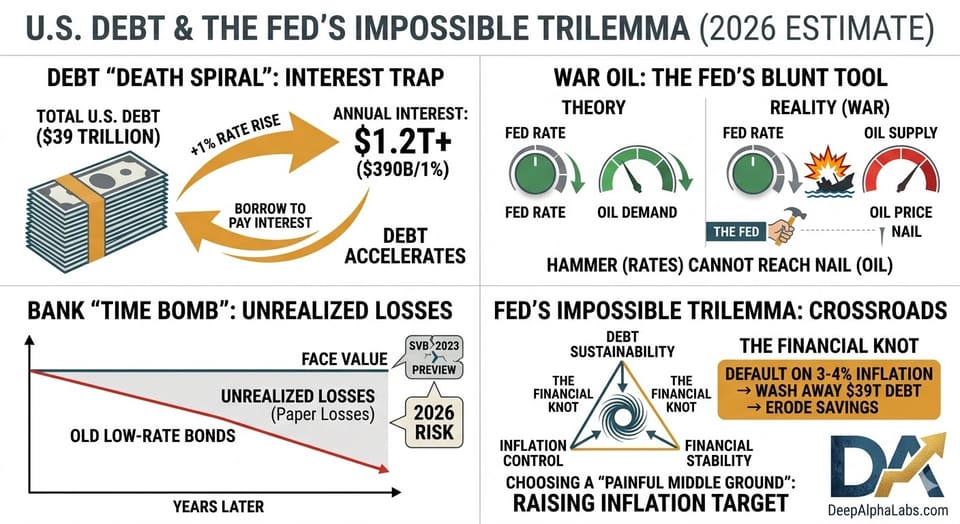
In the past, the Fed raised interest rates to cool down the economy. But today, the U.S. owes $39 trillion. Every time the Fed raises rates by 1%, the government must pay $390 billion more in interest every year. To pay this interest, the government has to borrow even more money by printing more debt. This extra money in the system actually makes inflation worse, undoing the Fed’s hard work.
2. Oil Prices and the "Hammer" Problem
Interest rates can stop people from buying cars or houses (the "demand side"). However, they cannot fix the "supply side." Because of the war, there is less oil. Even if the Fed raises rates to 10%, oil prices will stay high if the ships cannot sail. Chairman Powell has a "hammer" (interest rates), but the "nail" (energy) is out in the middle of the ocean where he cannot reach it.
3. The Bank "Time Bomb"
Many banks hold old government bonds from years ago when rates were low. As the Fed keeps rates high, these old bonds lose value. This creates "unrealized losses"—money the banks have lost on paper but haven't admitted yet. If the Fed doesn't lower rates soon, these banks might fail. If that happens, the Fed will have to print money to save them, which causes even more inflation.
4. Saving the Dollar's Reputation
The Fed is fighting a "Battle for the Dollar." If they lower rates to save the banks or the government, the value of the dollar will drop. People around the world might stop trusting the dollar (which is why some U.S. states are now buying gold). If the world loses faith, the dollar’s power as the global currency could crash.
DeepAlphaLabs Insight:
The Fed's biggest fear is not just high prices—it is losing control.
In 2026, we are entering a time of "High Inflation, High Rates, and High Debt." The Fed may choose a painful middle ground: raising the inflation target. They might accept 3% to 4% inflation as the "New Normal." This "Permanent Inflation" helps the government slowly wash away that $39 trillion debt, but it also means the money in your savings account will buy less and less every year.
In me the tiger sniffs the rose.
Subscirbe me for more data and insights.