Cracks in the Dollar Hegemony — The Escape to Real Goods
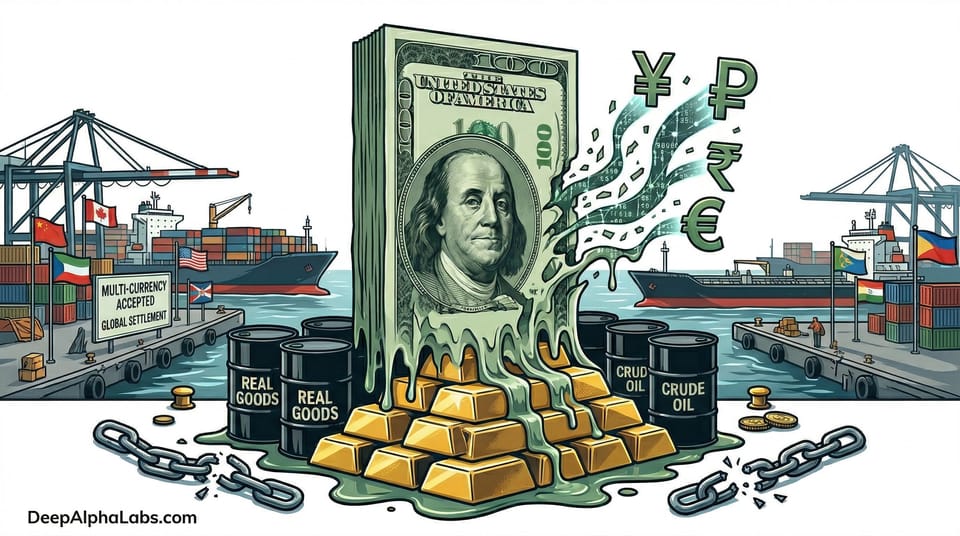
Everyone knows that the U.S. Dollar is backed by the U.S. Navy. But in March 2026, the world is learning that aircraft carriers cannot force everyone to use one single currency forever.
1. Selective Passage: The "Non-Dollar" Premium
The crisis in the Strait of Hormuz has sent a shockwave through the financial world.
When Chinese giant ships (COSCO) passed through the strait successfully this week, they weren't just carrying cargo; they were proving that non-dollar payment systems work.
In the past, 80% of oil had to be bought with dollars. Today, countries like Iran and Russia are accepting other currencies. When the world's most important energy—oil—stops being tied only to the dollar, the dollar becomes an "option" rather than a "necessity."
2. The Debt Trap: Why Central Banks are Buying Gold
The 4.5% interest rate was supposed to save the dollar, but it might be doing the opposite.
In 2025, central banks around the world bought a record 1,200 tons of gold. Meanwhile, the percentage of U.S. debt held by foreign countries dropped from 35% to 24% over the last decade.
When the U.S. government spends more on debt interest than on education, the world starts to worry. People are asking: "Can America pay its bills with real work, or just by printing more money?"
3. Manufacturing as Sovereignty: Real Goods vs. Paper Money
How can a Chinese motorcycle brand like ZX Moto threaten the dollar? It’s about what people value.
In 2026, the world sees that China can build high-performance machines (like the 820RR engine) for half the price. If a buyer can get a better machine and pay with their own currency, they have no reason to use the dollar.
The dollar is losing its "anchor." If the U.S. no longer controls the production of the best physical goods, it loses its power to dictate how the world trades.
4. 2026: The Age of Many Currencies
The dollar won't disappear overnight, but its "monopoly" is ending. In the spring of 2026, global traders are learning how to do business without needing permission from the U.S. banking system.
In me the tiger sniffs the rose.